
DEPKA advantages
Always in style
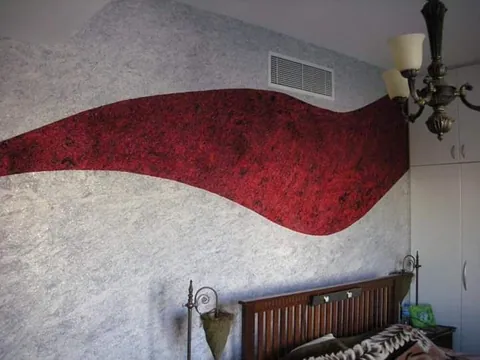
Trends come and go; natural texture stays. DEPKA cotton plaster is a wall coating that never goes out of fashion, suiting every style from a simple living room to a colourful children's room.

A timeless surface
Paint colours and wallpaper patterns can start to look dated over time. The lightly textured, cotton-fibre surface of DEPKA cotton plaster, by contrast, creates a timeless backdrop that works with the décor of any era.
Choose the colour and pattern you want and design spaces that always look stylish and never go out of fashion. Because the colour doesn't fade, the wall keeps its original shade years later; and if a section takes a knock, it is easily repaired without the repair showing.
A shade for every style
The 60 main colours fall into four families. In each one you can make a subtle or a bold choice.

Natural shades
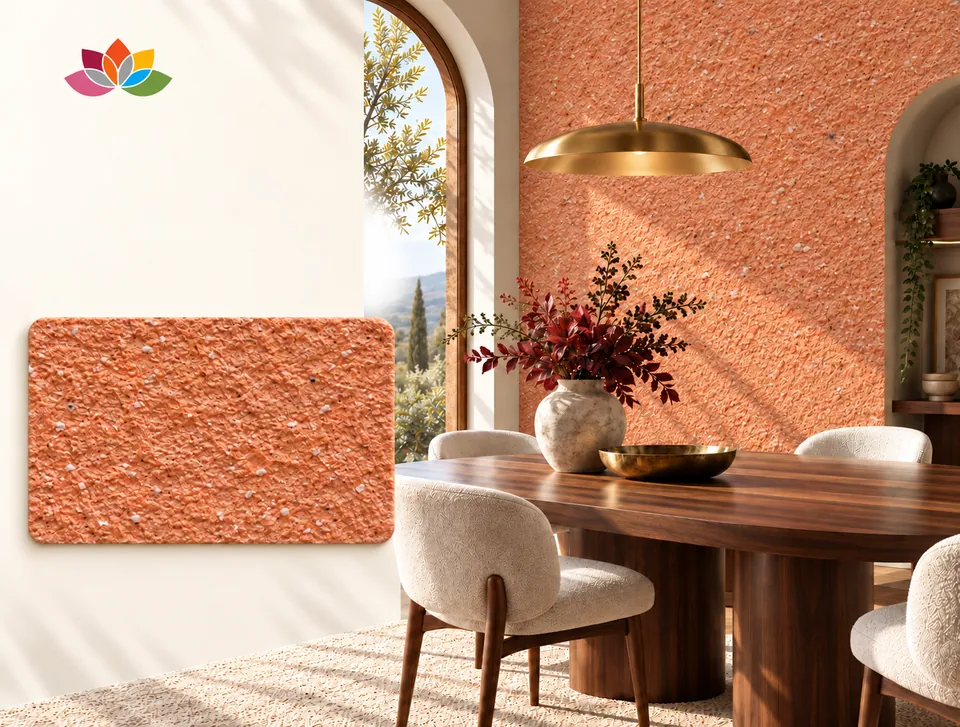
DP01–DP15: white, cream, beige, grey and brown. For minimal and classic spaces.
Example: DP08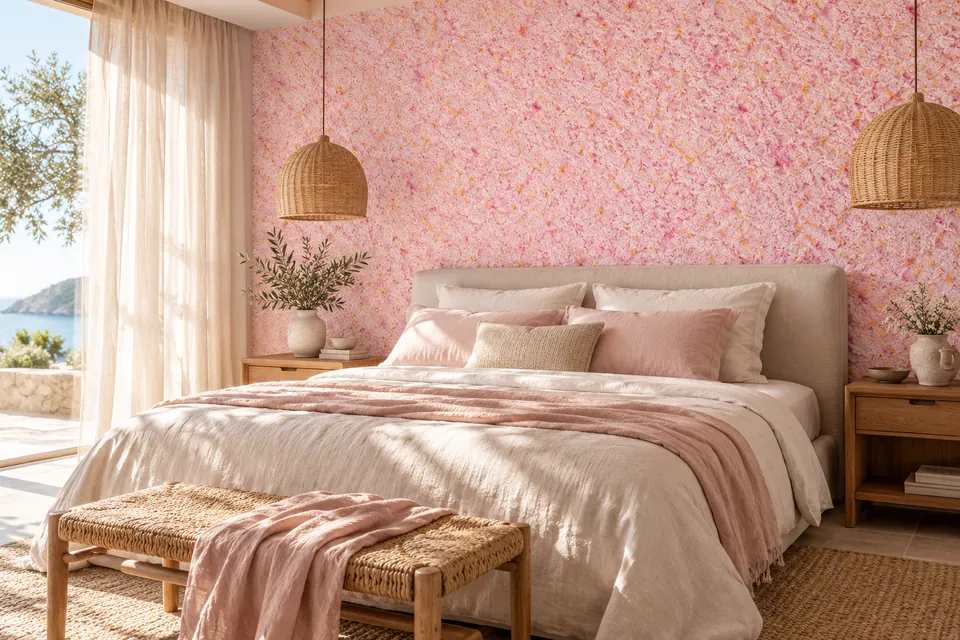
Pastel shades
DP16–DP30: yellow, green, lilac and pink. For bedrooms and children's rooms.
Example: DP18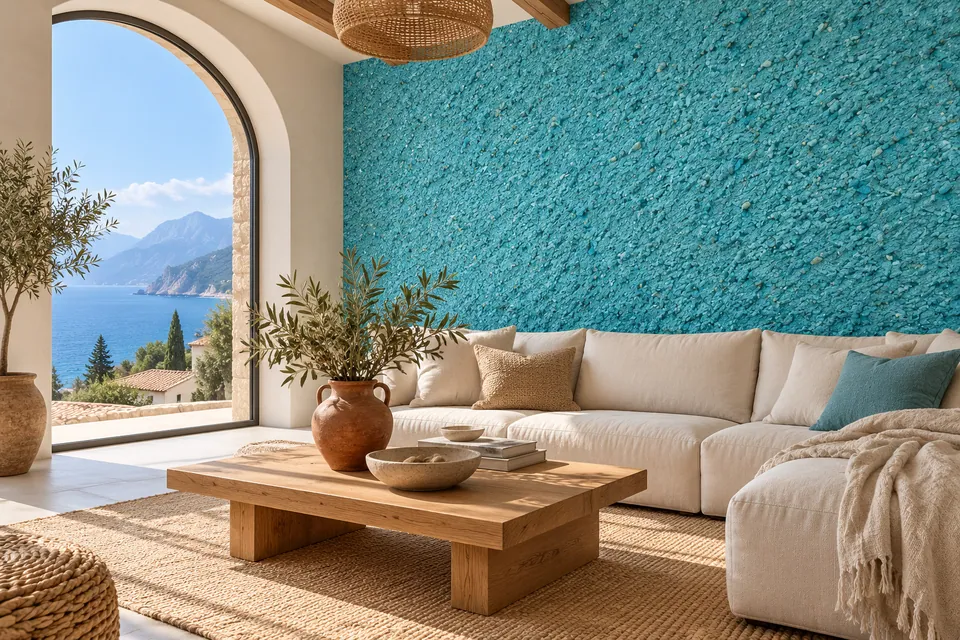
Blue and turquoise
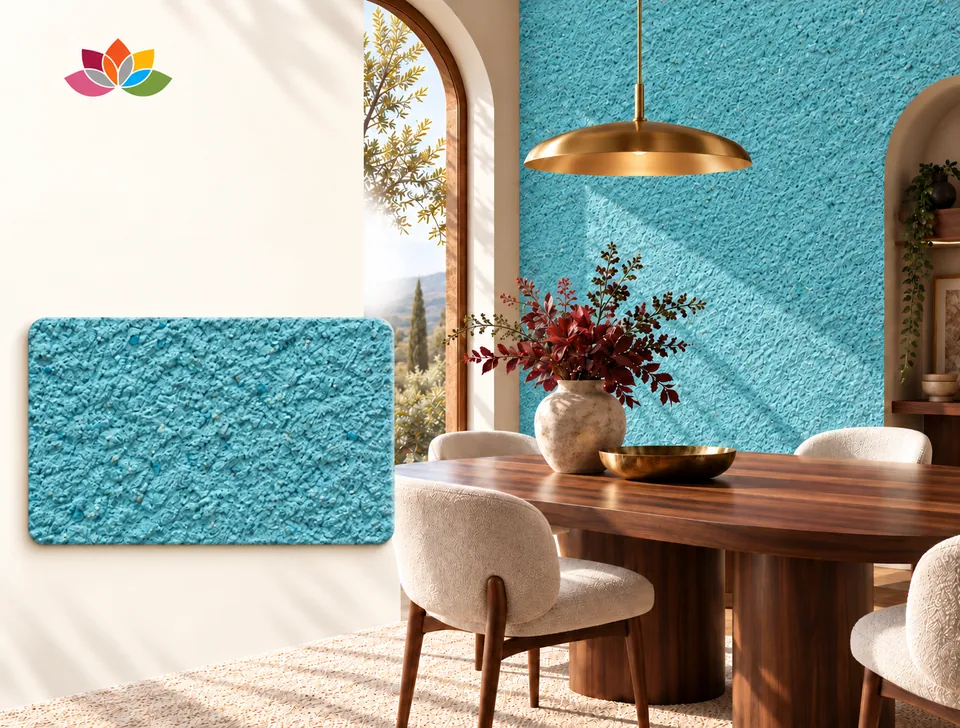
DP31–DP45: blue, navy and turquoise. For airy, calm spaces.
Example: DP42
Warm and vivid
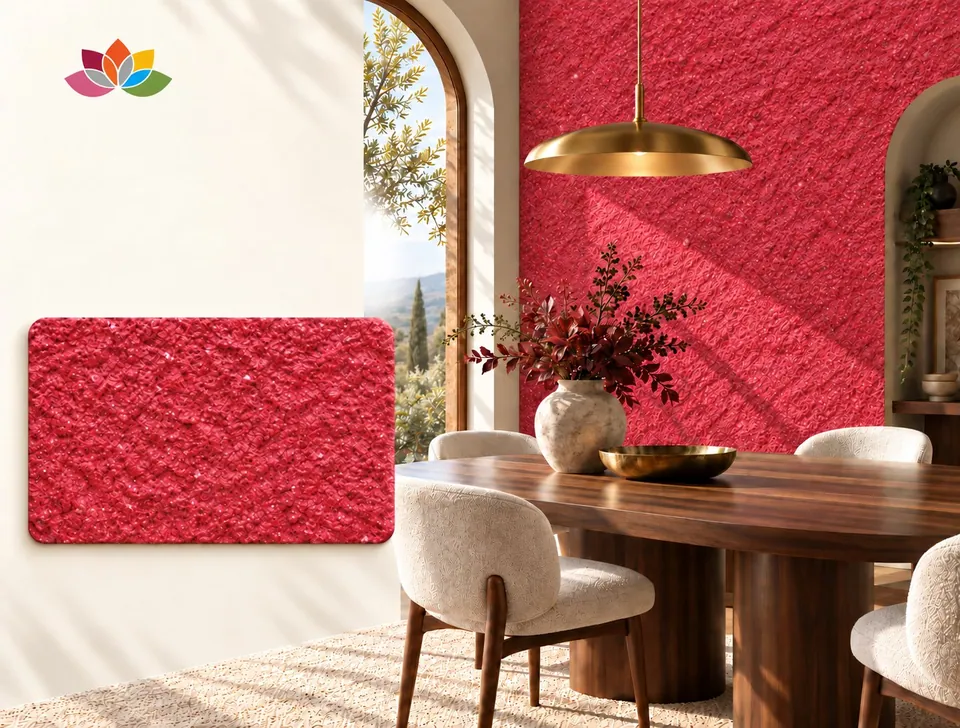
DP46–DP60: coral, red, burgundy, pink and anthracite. For accent walls.
Example: DP47Colour visualiser
Find the colour that suits your style
Tap a colour and watch the room change.
Natural tones
Pastel tones
Blue and turquoise
Warm and vivid
Frequently asked questions
Which decorating styles does cotton plaster suit?
Natural shades suit minimal and classic spaces, pastel and blue shades suit bedrooms and children's rooms, and warm, vivid shades suit cafés, shops and accent walls. With mixed colours you can also create shades of your own.
Does the colour fade over time?
No. The colour of DEPKA cotton plaster doesn't fade or change, and repaired areas show no colour difference.
Can I choose cotton plaster instead of silk plaster?
Yes. DEPKA cotton plaster offers the seamless, textured, warm look that people searching for silk plaster are after, with natural content. For details, see our comparison article.