

Application · FAQ
Frequently asked questions
The questions we hear most about DEPKA cotton plaster: the product, application, colours, prices and ordering, and dealers. If you can't find your answer here, message us on WhatsApp.
Product
Ingredients, where to use it, insulation, guarantee
Explore →Application
Preparation, primer, drying, repairs
Explore →Colours
60 colours, mixed colours, fading
Explore →Prices and ordering
Prices, packs, shipping, how to order
Explore →Dealers
Dealers in Türkiye and abroad
Explore →How it compares
Paint, shell plaster and similar coatings
Explore →About the product
What is cotton plaster?
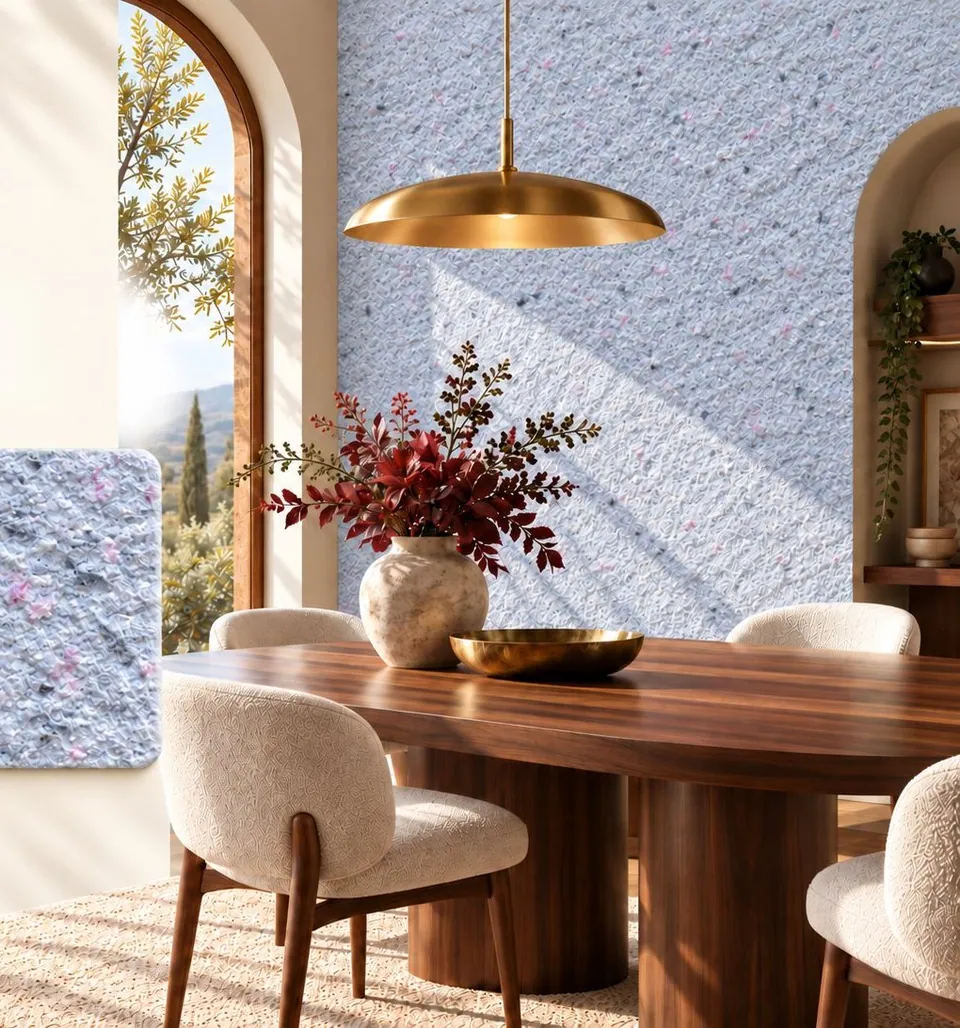
Cotton plaster, also called cotton wall plaster, is a decorative interior wall coating made from cotton, natural adhesive and decorative natural stone. DEPKA cotton plaster comes ready in the pack; you simply mix it with warm water and spread it onto the wall with a trowel. On its own, it can take the place of base plaster, finishing plaster, gypsum, satin gypsum skim, primer, paint and wallpaper. See the DEPKA cotton plaster page for details.
What is it made of?
It is 100% natural: cotton, natural adhesive and decorative natural stone. Nothing but water is added when you prepare it.
Where can it be applied?
It is applied to interior walls and ceilings. It can be used on concrete, plaster, gypsum, plasterboard, brick, aerated concrete, wood, glass, metal, PVC, stone and ceramic surfaces. It is a popular choice for homes, hotels, offices, shops, schools and cafés.
Can it be used on exterior walls?
No, cotton plaster is an interior product. For façades, see the shell plaster and exterior insulating plaster pages.
Can it be used in bathrooms and kitchens?
DEPKA cotton plaster is made for interior walls and ceilings and is resistant to moisture. For wet areas in direct contact with water, ask us and we will help you choose the right product.
Is it fire-resistant?
Yes. DEPKA cotton plaster has passed fire testing at the laboratory of TSE (the Turkish Standards Institution) to TS EN 13501-1 and TS EN ISO 11925-2. All the documents are on the documents and test reports page.
Does it provide thermal and sound insulation?
Yes, it contributes to both. Energy savings of up to 40% on heating and cooling are possible, and the porous cotton texture reduces echo in the room. The effect depends on the application thickness and the structure of the wall. See thermal insulation and sound insulation.
Does it crack over time?
No. Thanks to its flexible structure it does not crack or break, and it also covers small flaws in the wall.
How long is the guarantee?
When applied correctly, it is guaranteed for up to 10 years in new buildings and 3 years in older buildings.
Does it smell? Can it cause allergies?
No. DEPKA cotton plaster is non-allergenic, and it does not hold odours or harbour insects.
How should it be stored?
Keep it in its sealed packaging in a dry, well-ventilated place. Keep any mix prepared with water somewhere cool and use it within 24 hours.
Application
How is cotton plaster prepared?
Add 4 litres of warm water per 1 kg of product, mix for 20–25 minutes, leave to rest for 20 minutes and mix again for 5 minutes. The mix is then spread onto the wall with the transparent DEPKA trowel. For a step-by-step guide, see preparation and application.
Do I need a primer?
Not on most surfaces; it can be applied straight onto a newly built wall. On painted surfaces a silicone-free bonding primer or ceiling paint is recommended, and on crumbling surfaces a concrete contact primer.
Can it go over existing paint?
Yes, as long as the paint does not dissolve in water. It can be applied once the dust has been removed, and a primer is recommended to be on the safe side. Low-quality paints that dissolve in water must be removed first.
Can it go over wallpaper?
No. The wallpaper must be stripped and the surface cleaned first.
Can I apply it myself?
Yes. No special equipment is needed; a container, warm water and the transparent DEPKA trowel are all it takes. If it is your first time, start by trying a small area. You can watch the application in our training videos.
Which trowel should I use?
Cotton plaster is applied with the clear plastic DEPKA trowel. The transparent trowel costs 960 TL.
How thick is it applied?
It is applied 1.5–2 mm thick.
How long does it take to dry?
It dries in 12–24 hours, depending on the weather. Keep the room ventilated until it is dry.
How is damage repaired?
Wet the area with water, wait a little and smooth it with a flat-based glass or plastic trowel. For larger damage, wet and remove that section, add the same product and smooth it out. Because the colour does not change, the repair does not show.
Colours
How many colours are there?
There are 60 main colours (DP01–DP60), grouped into four families: natural, pastel, blue-turquoise and warm-vivid. All the colours are on the colour chart page.
Can colours be mixed?
Yes. You can create mixed colours and patterns of your own by blending several colours while dry, or by combining separate mixes on the wall. See mixed colours.
Does the colour fade over time?
No. It keeps its colour for many years, and repaired areas show no colour difference.
Is the colour on screen the same as on the wall?
Screen settings and light change how colours look. Try the colour in the colour visualiser and look at the close-up texture and colour card photos; if you are still unsure, send a photo of your space on WhatsApp.
Prices and ordering
How much does cotton plaster cost?
DEPKA cotton plaster costs 1,600 TL per 2 kg pack (800 TL per kg). The material cost works out at roughly 200–230 TL per square metre. These are Türkiye prices; for export orders, please contact us. See our cotton plaster prices article for details.
How many packs should I buy?
1 kg covers 3.5–4 m², so a 2 kg pack is enough for about 7–8 m². Use the coverage calculator to work it out from your wall measurements.
How do I order?
Choose your colours and add them to the basket on depkamarket.com; your order details then reach us via WhatsApp. You can also message our WhatsApp line directly on +90 532 059 87 83. Orders are placed by number of packs: 2, 4, 6, 8 kg and so on.
Is there a delivery charge?
No. Shipping is free on cotton plaster orders within Türkiye.
How much do the other products cost?
Crystal ceramic plaster costs 2,400 TL, the transparent trowel 960 TL, mica flakes 240 TL and mosaic lamps 1,920 TL. Please ask us for prices of shell plaster, glitter grout, panels, XPS ceiling products, insulating plasters and mixed colours. All products are on the products page.
Do you sell outside Türkiye?
Yes. DEPKA sells to 15 countries. See the international dealers page for our dealers abroad, and write to us for orders and quotes.
Dealers
How can I become a dealer?
We are building our dealer network in Türkiye. Fill in the dealer application form and we will review your application and get back to you. If you are based outside Türkiye, you are welcome to apply through the same form or to write to us.
Do you have dealers abroad?
Yes. We have dealers in Benin, Togo, Cameroon and Lithuania–Latvia, and we have run representative and applicator training in Côte d'Ivoire. Contact details are on the international dealers page.
Do you provide training for dealers?
We have run representative and applicator training abroad; you can see examples on the training gallery page. Ask us about dealer terms and training support when you apply.
How it compares
Are cotton plaster and silk plaster the same thing?
No. What goes into products sold under that name varies from brand to brand. DEPKA cotton plaster is made only of cotton, natural adhesive and decorative natural stone; it contains no polystyrene or synthetic fillers. See our comparison article for details.
Does DEPKA sell silk plaster?
No. DEPKA makes and sells cotton plaster under its own brand. The product family also includes crystal ceramic plaster, shell plaster, panels and insulation products.
What is the difference between liquid wallpaper and cotton plaster?
Liquid wallpaper is a general name for textured, fibre-based wall coatings, and what goes into it varies by manufacturer. DEPKA cotton plaster is a natural alternative with clear ingredients: cotton, natural adhesive and decorative natural stone.
What is the difference between cotton plaster and paint?
Paint is a thin, flat layer, whereas cotton plaster is a textured coating 1.5–2 mm thick. On most surfaces it needs no primer or gypsum skim, it contributes to thermal and sound insulation, it does not crack and it can be repaired without leaving a mark. Details: cotton plaster and paint.
What is the difference between shell plaster and cotton plaster?
Shell plaster is a separate product for interior and exterior walls, supplied as a 20 kg set; it is applied with adhesive and primer, using a steel trowel. Cotton plaster is for interiors and is prepared with water only. See shell plaster.
Can't find your question?
Message our WhatsApp line or give us a call: +90 532 059 87 83 · +90 533 029 87 83.