
Fire-resistant and tested
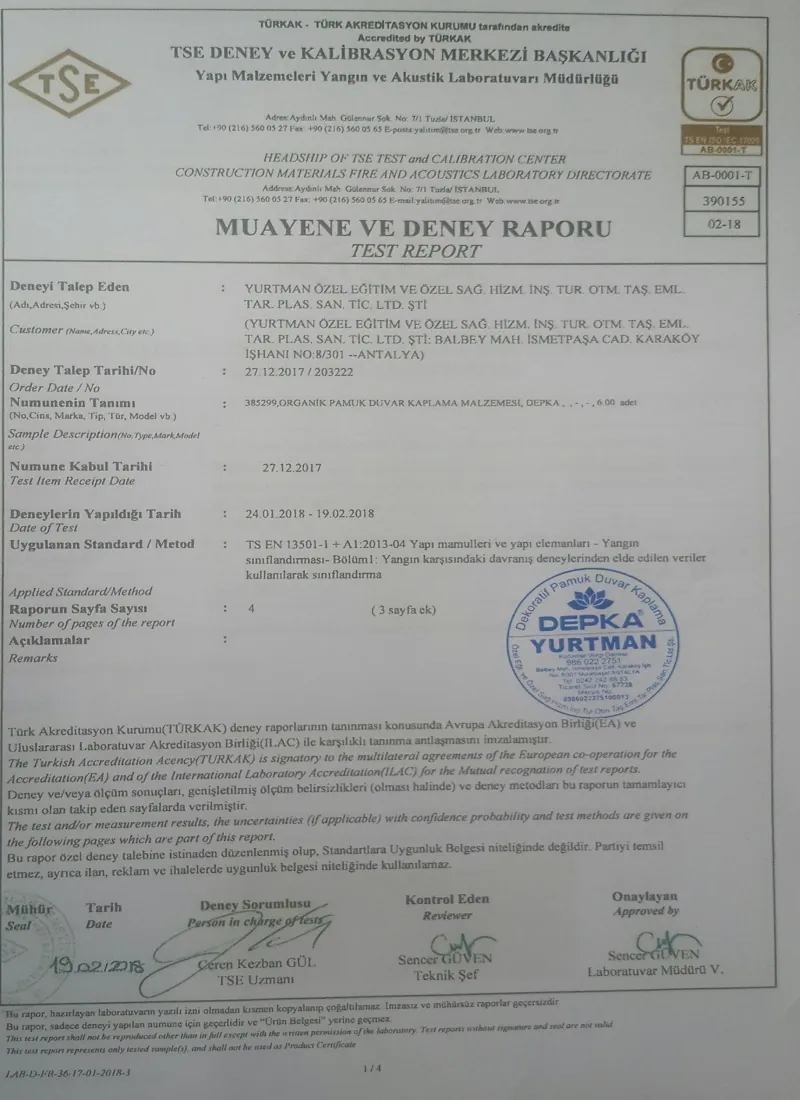
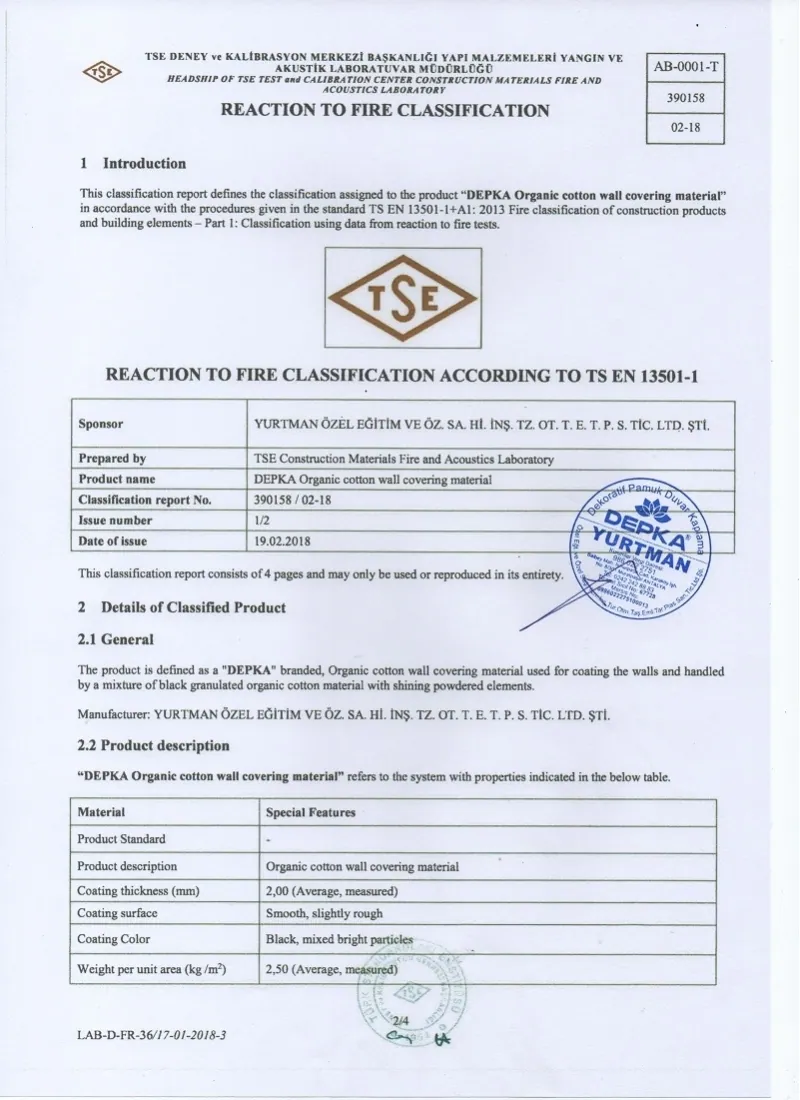
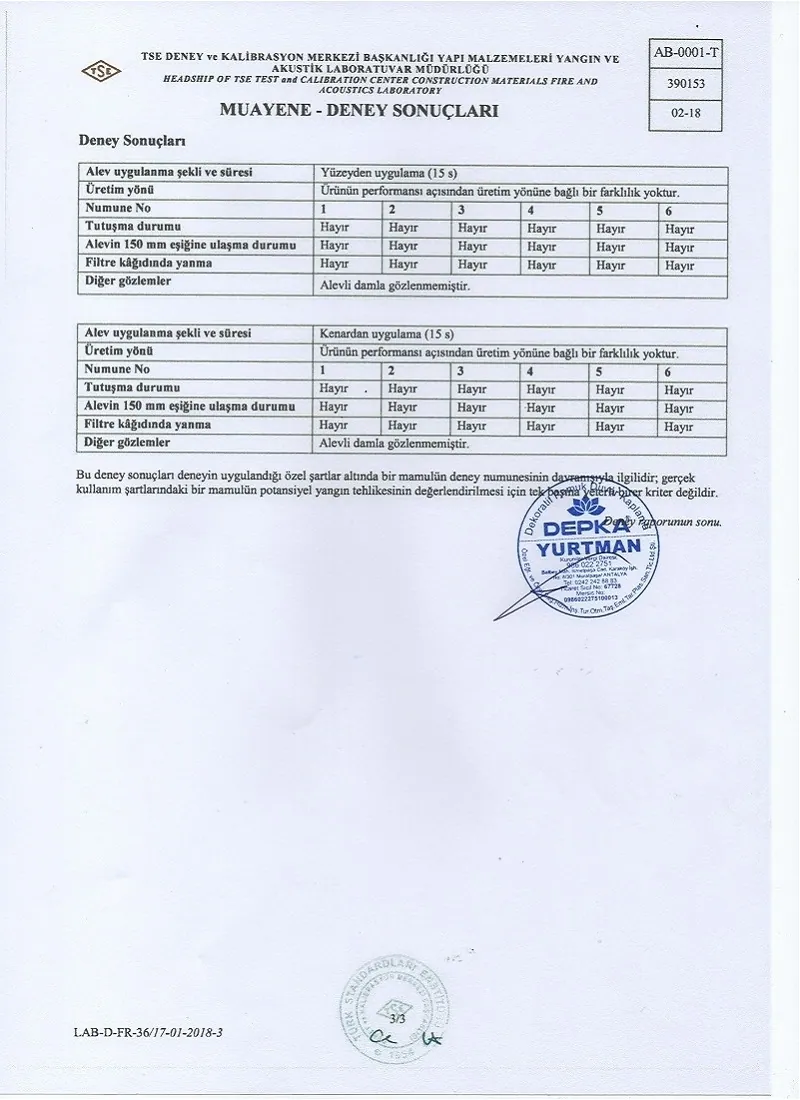
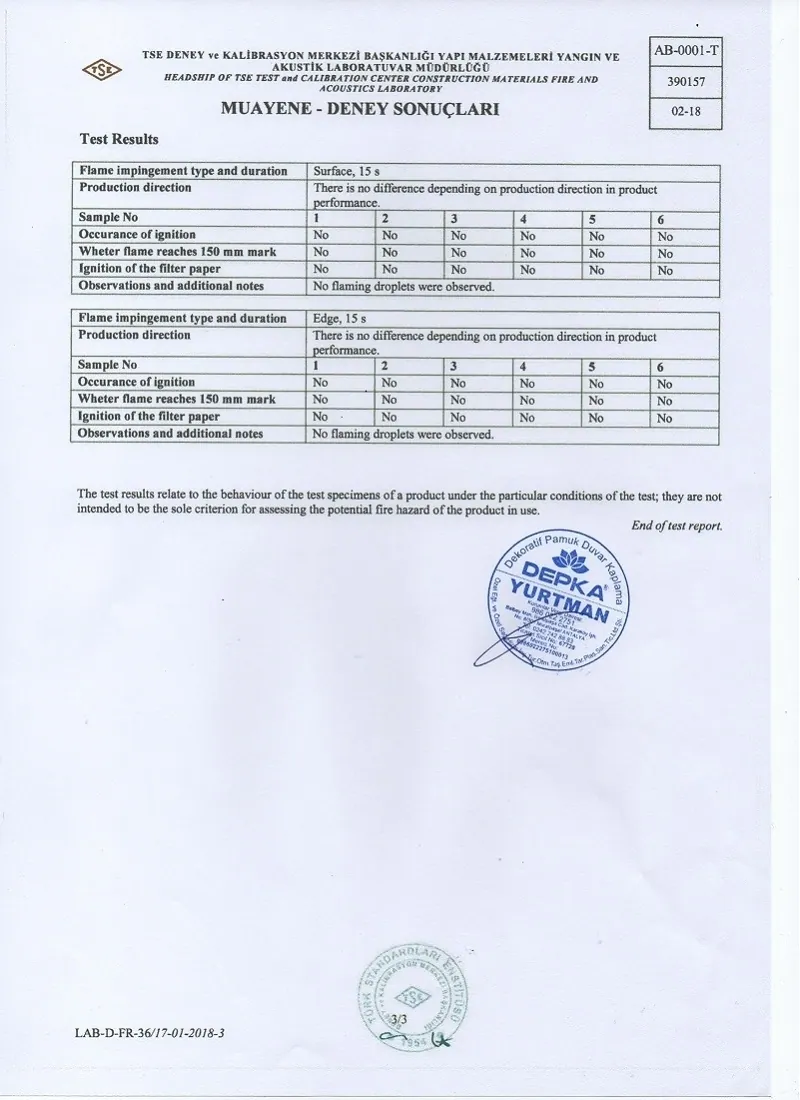
DEPKA cotton plaster, our decorative cotton wall coating, has been fire-tested at the accredited laboratory of TSE (Turkish Standards Institution) to the TS EN 13501-1 and TS EN ISO 11925-2 standards. The test reports record how the wall coating behaves when exposed to flame and fire. You can view them on our documents and test reports page.
Resistant to knocks
As well as being a decorative wall coating, cotton plaster has a flexible, soft structure. It does not crack or flake off under sudden impact. A damaged area is moistened with water and smoothed with the trowel, leaving no colour difference.
Our documents
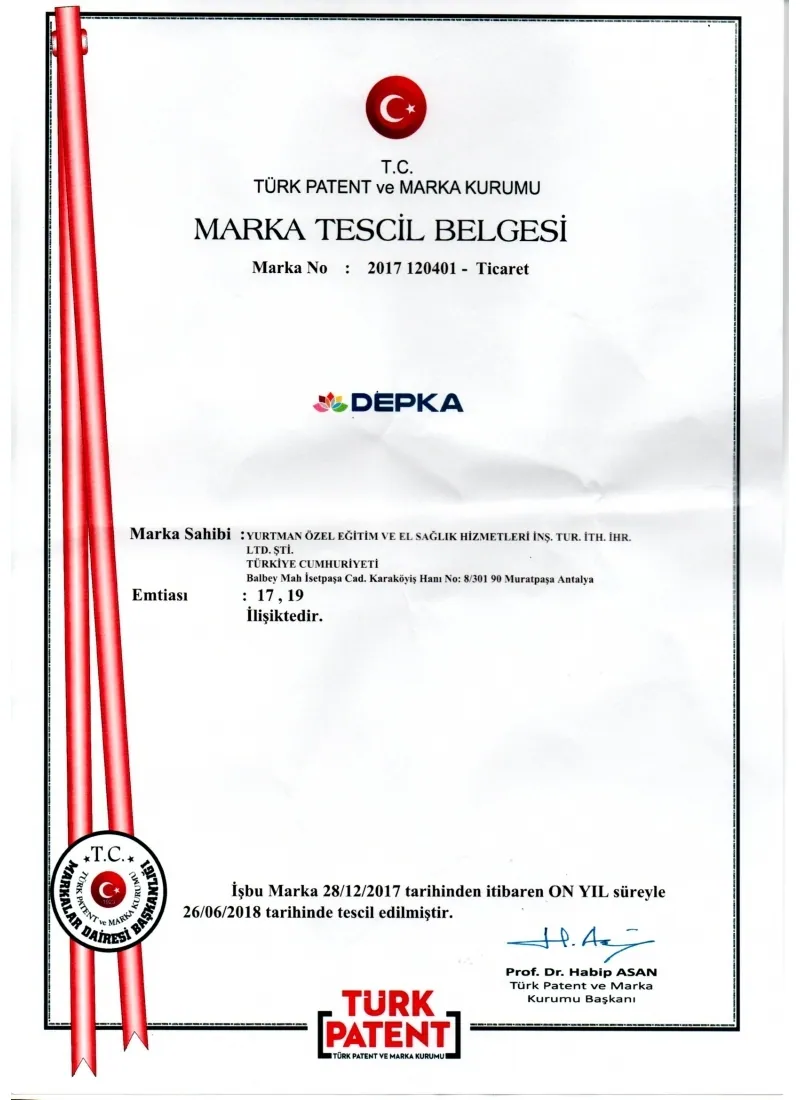
Our trademark registration and fire test reports. Tap a document to view it full size.
Insulation
Helps with thermal and sound insulation
The main ingredient of cotton plaster is natural fibre. Its fibrous structure slows the transfer of heat through the wall, helping you use less energy for heating in winter and cooling in summer. It provides up to 40% energy savings on heating and cooling.
The pores in the texture absorb sound rather than reflecting it. Echo within the room is reduced; on the ceiling it helps reduce noise from the floor above, and on adjoining walls, noise from next door.
In everyday use
Features you notice as you live with it
Soft, diffused light
The special texture of the surface breaks up and diffuses light; it does not glare and it softens the lighting.
Explore →Easy to clean
It is not prone to collecting dust or soot. A soiled area is moistened and smoothed with the trowel.
Explore →No hiding places for insects
A surface that bonds fully to the wall and leaves no gaps gives insects nowhere to hide.
Explore →Anti-static
Its natural fibres do not hold static electricity, which helps reduce the dust the surface attracts.
Explore →Moisture-resistant
Its breathable structure resists moisture; it does not blister or flake.
Explore →Keeps its colour
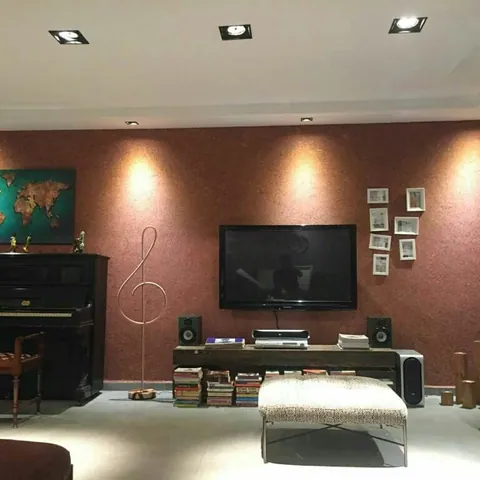
It adheres well to the surface and keeps its colour for years, because the colour is built into the product.
Explore →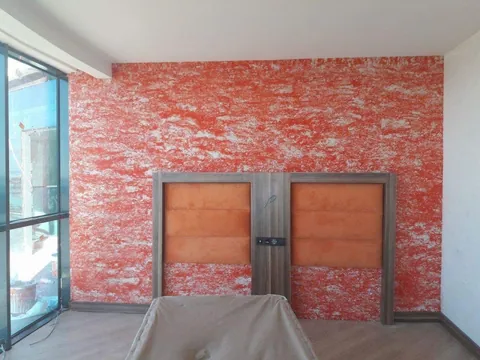
Application
Goes on any surface and works for repairs too
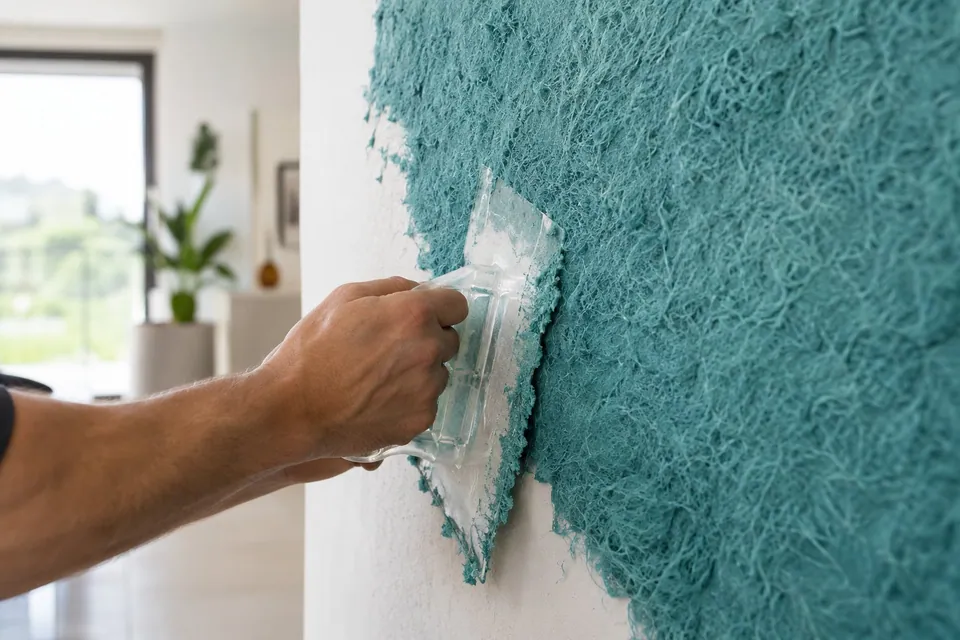
Mixed with water, cotton plaster takes on a paste-like consistency, so it can be shaped any way you like. It is applied to the surface in a thin layer with a special plastic trowel.
It can be applied over many surfaces, including plaster, gypsum, paint, ceramic tiles, glass, wood, aerated concrete (Ytong) and metal. Because the paste fills gaps and hairline cracks as it is applied, it is also used as a repair and renovation material on damaged walls.
Decoration
An interior decoration material
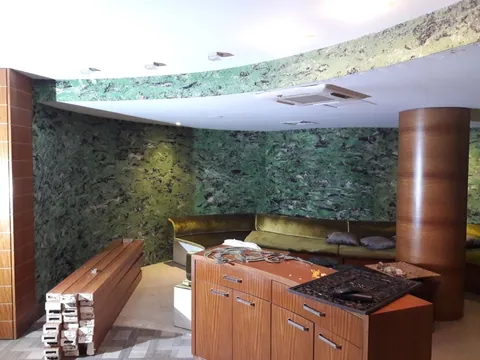
Cotton plaster grips firmly to the surface it is applied to and does not blister. Because the colour is built into the product, there is no separate coat of paint.
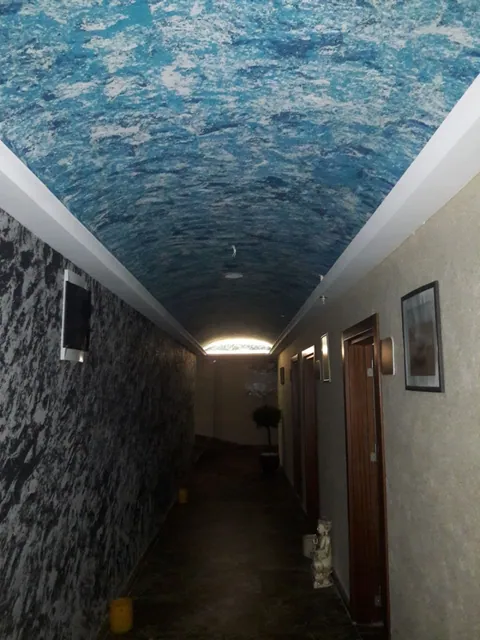
The 60 main colours can be used on their own or blended, and mixed shades open up countless patterns. Landscapes, portraits and picture-like designs can also be created on the wall. You design your walls to your own taste.
Frequently asked questions
Does cotton plaster burn?
DEPKA cotton plaster is fire-resistant; it has been tested at the TSE laboratory to the TS EN 13501-1 and TS EN ISO 11925-2 standards. You can review the test reports on our documents and test reports page.
How do I clean cotton plaster?
Spray water on the stained or soiled area and, once the cotton softens, smooth it with the trowel. If the dirt is heavy, that piece is removed and renewed with paste made from the same product; no colour difference remains.
How much does it help with thermal insulation?
It provides up to 40% energy savings on heating and cooling. The effect varies with the structure of the wall and the thickness of the application.