
Training gallery · Application
Applying mixed colours
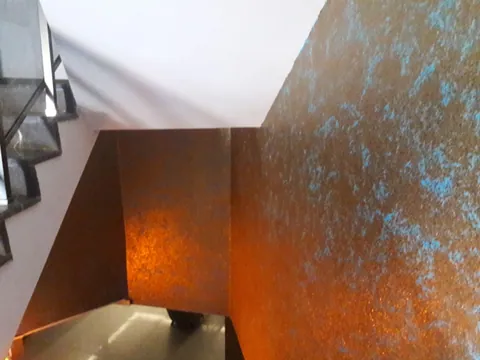
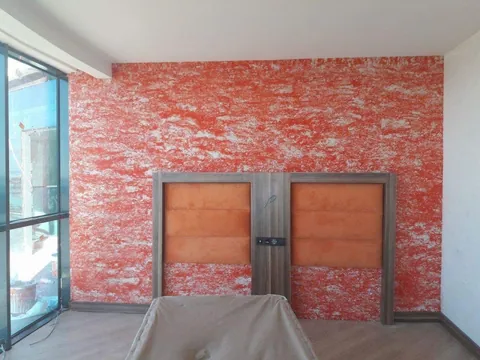
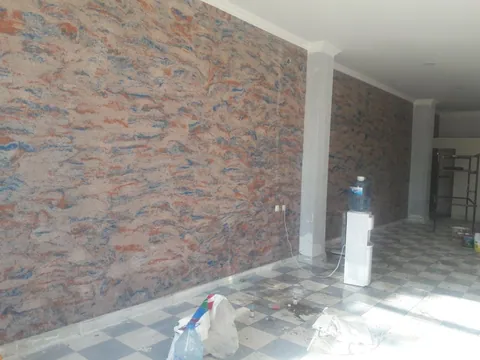
There are two ways to create a mixed colour: blend the colours while dry into a single batch, or combine separate batches on the wall. The first gives a speckled finish; the second gives veined and marble-effect surfaces.
Methods
Two methods, two different textures
Dry mixing
Mix the colours you've chosen in the same container before adding any water, then prepare them just as you would a single colour. The result is a speckled texture spread across the surface.
Combining on the wall
Prepare each colour in its own container. Bring the batches together side by side on the wall or on the trowel and spread them at the same time to create veined, cloudy or marble-effect patterns.
Method 1
Mixed colour by dry mixing
- 01
Choose the colours and ratio
Pick a base colour and one or two accent colours. Try the ratio on a sample panel first.
- 02
Mix dry
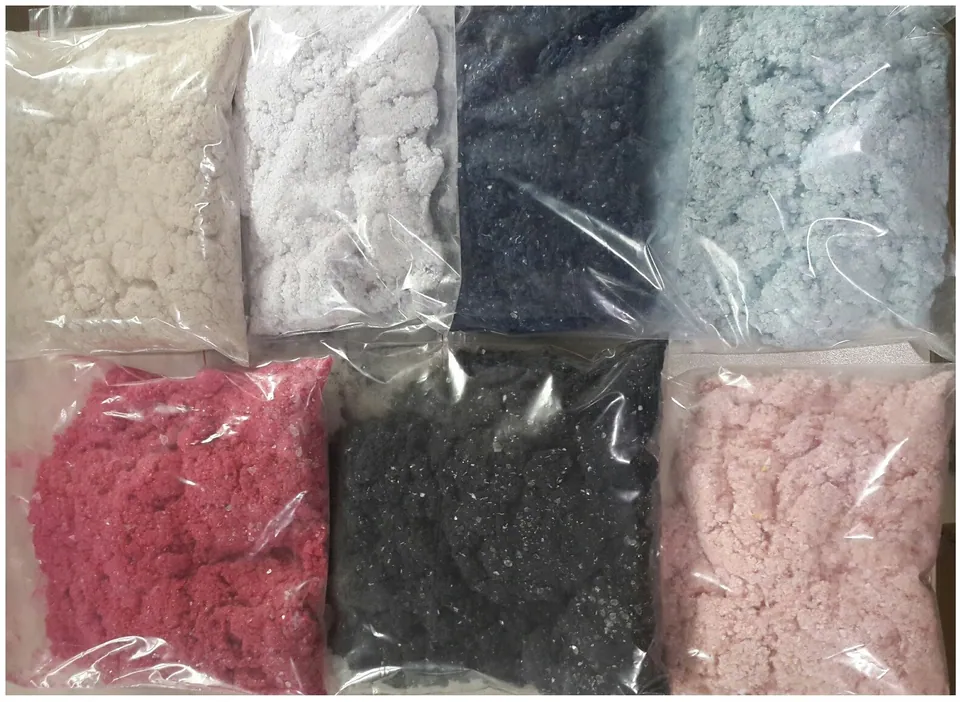
Empty the packs into a plastic container and mix the colours by hand, pulling apart any cotton that has clumped together.
- 03
Add the water
Add 4 litres of lukewarm water per 1 kg of total product; mix for 20–25 minutes, leave to rest for 20 minutes, then mix again for 5 minutes.
- 04
Apply
Spread the mix 1.5–2 mm thick with the transparent DEPKA trowel. Finish each wall with the same mix.
Method 2
Patterns by combining on the wall
- 01
Prepare the batches separately
Prepare each colour in its own container with the same water ratio and leave them to rest.
- 02
Combine on the trowel
Load two colours side by side onto the trowel and spread them together; the colours separate into veins on the wall.
- 03
Combine on the wall
After applying one colour, add the second next to it or into it while it is still wet, then smooth them together with the trowel.
- 04
Leave to dry
The product dries in 12–24 hours. Once dry, you can lightly dampen any areas with trowel marks and smooth them out.
From our mixed colour projects
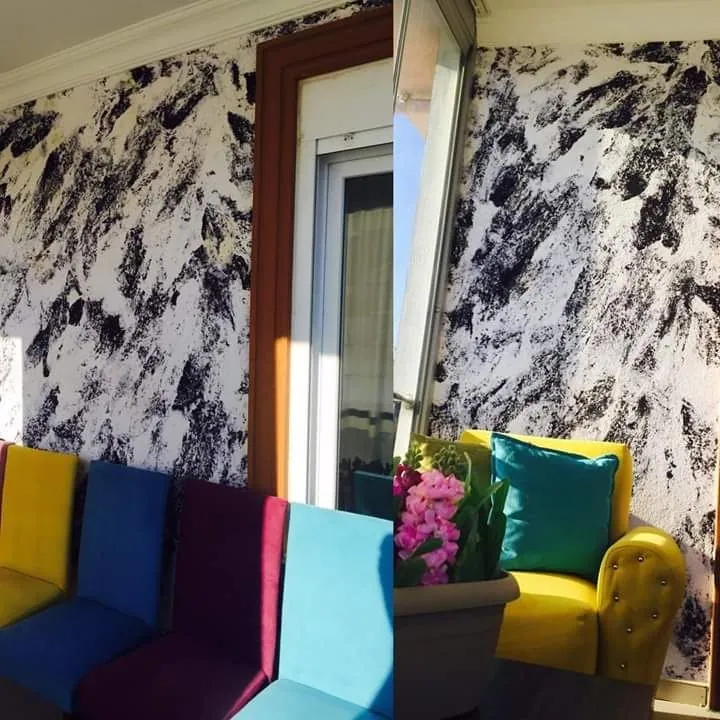
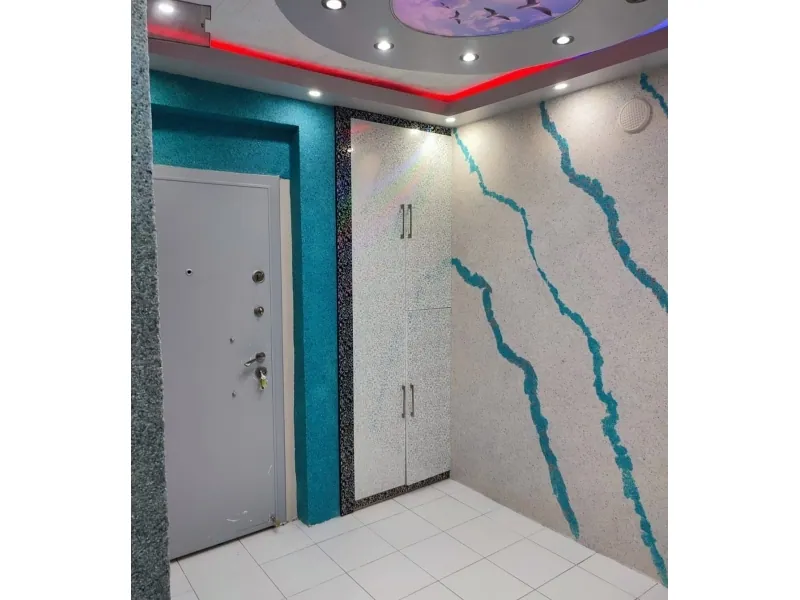
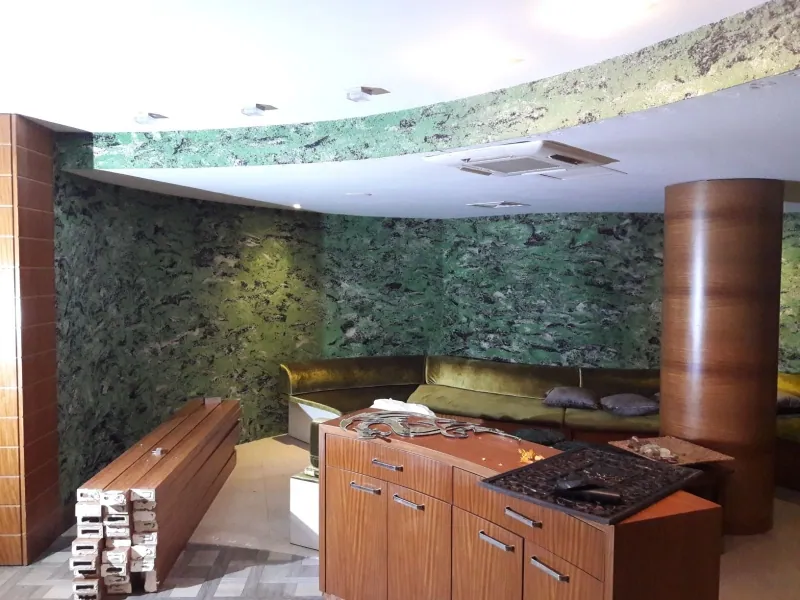
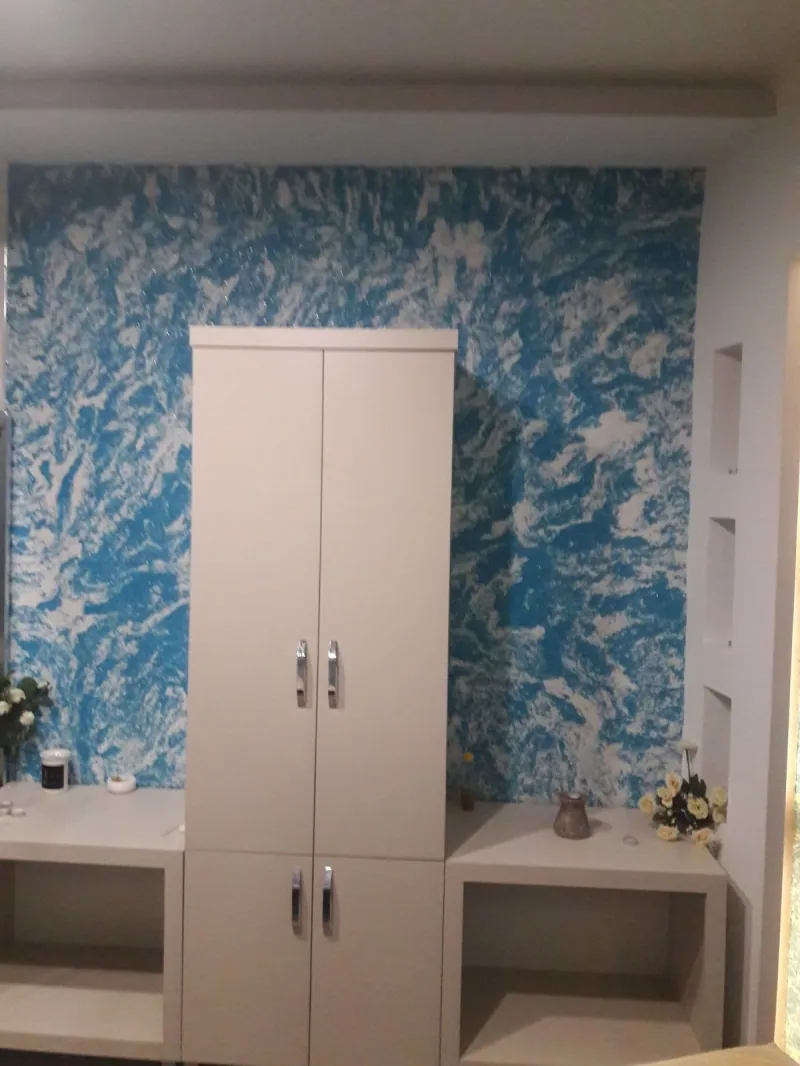
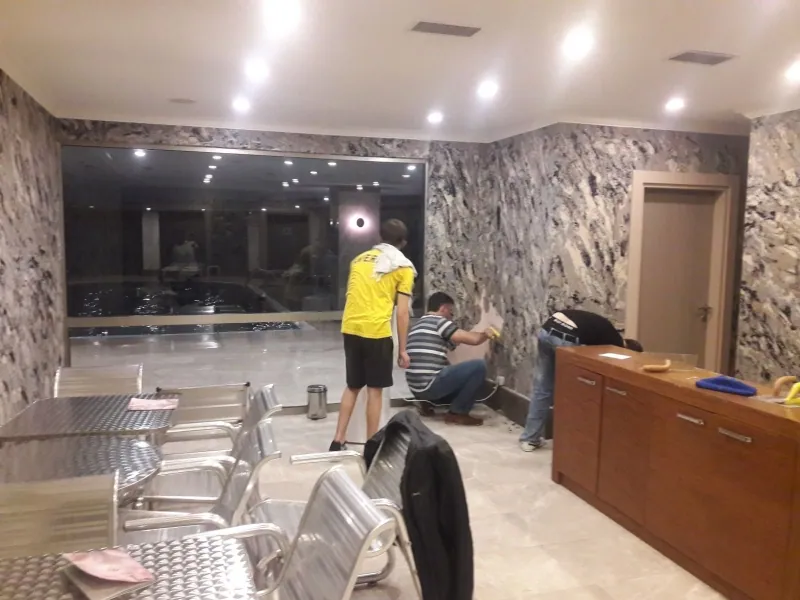
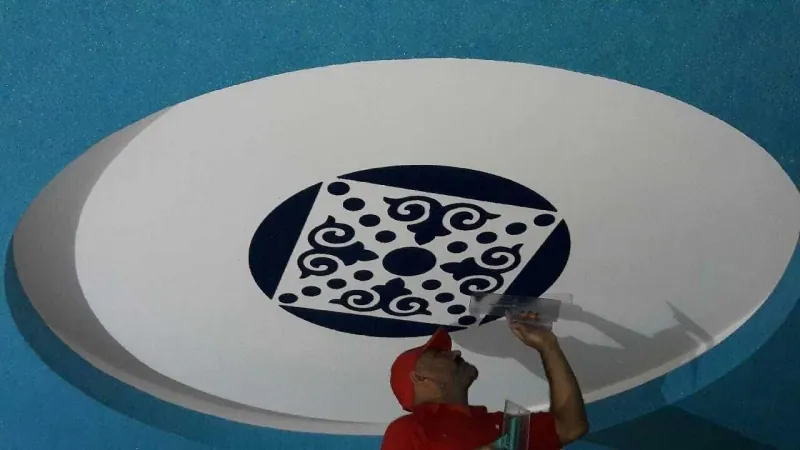
Keep some of the mix for repairs
With a mixed colour, matching the exact shade later is harder than with a single colour. When you finish, set aside some of the dry mix and store it in sealed packaging, so you can use the same mix for repairs. See easy repair.
About mixed colour application
How many packs do I need for a mixed colour?
Work out the total area: 1 kg of product covers 3.5–4 m². For 14 m², for example, you'll need about 4 kg, or 2 packs; divide this between your chosen colours according to the ratio. You can also use the coverage calculator.
Can mixed colours be applied to ceilings?
Yes. Cotton plaster is applied to interior walls and ceilings, and mixed colours also work well in areas such as ceiling bands or ceiling roses. You can see ceiling examples in the gallery on this page.
Can I create zones in different colours on the same wall?
Yes. Cotton plaster can be shaped however you like, so you can create zones, stripes or figures in different colours on the same wall. For examples, see the artistic work gallery.